Search This Blog

Saturday, March 30, 2013

Springtime at Arlington Garden

Yesterday I had a nice visit at Arlington Garden, where the woman in the photo above was enjoying a leisurely stroll.

I was there to meet with Chuck Hudson, who serves on the board of the West Pasadena Residents' Association. We had been trying to get together for some time to discuss...well, I'll save that for later.


Arlington Garden is at 235 Arlington Dr. at Pasadena Avenue.

After Chuck left, I spent an hour or so meandering through this magnificent piece of heaven on earth and Pasadena's only dedicated public garden. I hadn't been there in a few months.

Dozens of intertwining pathways lead through three spectacular acres. Whether you're a hardy hiker or need a little ADA action, Arlington Garden can accommodate you.


You'll find pleasant surprises around every corner.


Benches, tables with umbrellas, comfortable chairs and bright pots invite visitors to slow down and stay awhile.


There are several entrances. This one on the Arlington Drive side has a few steps, but if you prefer flat surfaces there are plenty of those entrances as well. 


Some brief history: Formerly the site of the Durand Estate, the land sat vacant for more than 40 years after the mansion was demolished in the early 1960s. Pasadena City Councilman Steve Madison hosted a series of community meetings in 2004 to give residents the opportunity to provide input on potential uses.

When no consensus could be reached, Pasadena residents Charles "Kicker" and Betty McKenney came up with an inspired idea: create a Mediterranean demonstration garden. The City of Pasadena began leasing the land from Caltrans and students from Cal Poly Pomona created the conceptual drawings that helped guide the garden’s future direction.

Under Kicker and Betty's superb leadership and with support from Pasadena Water and Power, Pasadena Public Works Department, Steve Madison, dozens of donors, volunteers and others, the huge blank canvas was slowly and lovingly transformed into a beautiful refuge teeming with drought-tolerant trees and thousands of plant species native to Southern California or otherwise suited to our semi-arid climate.


It's now certified by the National Wildlife Federation (ducks, birds and butterflies, not bears or bobcats!).

Kicker and Betty are at Arlington Garden frequently, so be sure to say hello if you see them when you visit. (Photo credit for this shot only: Pasadena Now)


At this time of year the nearly 50 Washington navel orange trees are in bloom, which means it won't be long before a fresh batch of Arlington Garden Sweet Orange Marmalade will be available!


Beginning at the opening of the classic seven-circuit labyrinth, walk slowly and thoughtfully all the way to the center and then retrace your steps. Many find it a contemplative and peaceful experience.


Ready to take your own tour of Arlington Garden? There's an app for that!

Some words of advice:

* Clean up after Rover and keep him on a leash.
* There are no restrooms, so "go" before you come.
* Bringing food in? Take your trash out with you.
* No smoking!
* Stay as long as you like, sunrise to sunset, 365 days a year.

If you'd like to volunteer at Arlington Garden or donate dollars or materials, please click here.

Gardens help sustain us physically, mentally, emotionally and spiritually. They differ from parks in that plants and trees provide the focal point in a garden. You won’t find play structures or merry-go-rounds here. . .A middle school student wrote that she likes Arlington Garden ‘because I can hear my thoughts here.' 
-- Betty McKenney

Thursday, March 28, 2013

Mystery History -- Solved!

Well, I stumped everybody this week.
 
In the 1883 photo above, four women wait their turn in front of the Ferndale Gallery, Pasadena's first photo studio (note the photographs on display).
 
The business had been established the year before by George Weingarth, Pasadena's first professional photographer. He was among the settlers who founded the Indiana Colony.
 
In addition to portraits, Pasadena landscapes and buildings were photographed by Weingarth and they have become iconic, including these*:


 While doing my research for this post, I learned there are no documented photographs of Weingarth. He preferred to stay behind the camera.
 
According to my favorite reference book about local history, "Pasadena: Historical and Personal" by John Windell Wood, Weingarth was among an impressive list of firsts:
 
The first drug store was the Pasadena Pharmacy, conducted by this writer.
The first postmaster was Henry T. Hollingsworth, appointed September 21st, 1876.
The first bank was the Pasadena Bank, organized November 21st, 1884. It began business January 12, 1885. P.M. Green, president.
The first "practicing" barber was A.S. Hollingsworth, who had a chair in the corner of his father's store. The first shop was opened on North Fair Oaks Avenue in 1883 by a man named Rossi, and afterwards moved to West Colorado Street; later purchased by Joe Laspada, who still owns it.
The first harness shop was owned by Harry C. Price, who opened up in 1883.
The first photographer was George Weingarth, who opened the "Ferndale Gallery" in 1882. Some of the old pictures in this book were from his photographs.
The first real estate dealer was T.P. Lukens.
The first bicycle shop was owned by Ed Braley just where his fine four-story building now stands.
The first lumber yard was started by J. Banbury. The office stood where the Metcalf Building now is -- on Colorado Street, by the Santa Fe tracks -- 1883.
 
* Fair Oaks looking north from Colorado, 1884; Arroyo Vista Guest House (c 1883); Orange Grove at California looking south (1883)


Tuesday, March 26, 2013

Mystery History

Where are we? And what's happening?

The first person to guess correctly will win lunch with me -- I'll buy yours and you'll buy mine.

Remember, leave your brief guess as a comment on this blog but don't try to give the entire back story (that's my job).

I'll have the full scoop on Thursday.

Thursday, March 14, 2013

Mystery History -- Solved!


Petrea wins with her 9:33 p.m. Wednesday guess "...these are students at Ambassador College, on the little bridge that crosses the waterfall..."  

In the 1985 photo above, a couple stands on a bridge overlooking the waterfall flowing into the stream that runs through the Ambassador College campus.

Founded in 1947 by Herbert W. Armstrong, Ambassador College was a four-year liberal arts college that became the headquarters of Worldwide Church of God.

Various lots were consolidated within a four-block area at the time to incorporate several mansions dating from 1905 to the 1920s along the east side of "Millionaires Row" on South Orange Grove Boulevard. These became the campus buildings.


("Millionaires Row" also includes such iconic homes as the Wrigley Mansion, Fenyes Mansion, the Gamble House and the Cravens Estate, though these are not on the Ambassador property.)

As the college population grew, more structures became necessary, including additional classrooms, administrative offices, dorms and television studios.

The architecture and planning firm Daniel, Mann, Johnson and Mendenhall (DMJM) was commissioned in 1963 to develop the campus master plan that includes the mid-century modern structures we all know well today. . .


 . . .and the magnificent Ambassador Auditorium, built in 1972 and known as the Carnegie Hall of the West.


I had the privilege of seeing performances at Ambassador Auditorium by Leontyne Price, Jessye Norman, Cecilia Bartoli, Mel Torme, Yo-Yo Ma and so many others. (And it was the site of "Hollywood Week" during this season's American Idol.)

Landscape architect Garrett Eckbo designed Ambassador College's lush gardens, walkways, fountains and the stream, all of which are an iconic part of the Pasadena landscape to this day .


 A change in the tithing policy for Worldwide Church of God abruptly sent the funding for Ambassador College and Ambassador Auditorium into a nosedive.

As a result, Ambassador College and Ambassador Auditorium closed in 1997* and the educational functions were consolidated with operations in Big Sandy, Texas.

Worldwide Church of God put the 49-acre campus on the market in 1999,

Maranatha High School purchased part of the south portion near Del Mar and St. John Avenue in 2004 and moved there from the William Carey University campus (which is in my 'hood).

That same year Ambassador Auditorium, on St. John Avenue near Green Street, was saved when it was purchased by Harvest Rock Church, which conducts services there. It is also the venue for concerts and other events, including Pasadena Symphony concerts.

The City of Pasadena's West Gateway Specific Plan encourages thoughtful development with a focus on arts, culture and education in areas immediately west of downtown Pasadena.

Here are the boundaries of the specific plan; the former Ambassador campus is between Orange Grove Boulevard and St. John Avenue, from Green Street to the north to Del Mar Boulevard to the south.


After a series of fits and starts, including the foreclosure of one developer's interests and the scrapping of plans for a senior complex when that company pulled out, City Ventures purchased much of what is now known as Ambassador West in 2010 for market-rate residential projects.

Construction is underway on the Del Mar side near Orange Grove (I shot this photo yesterday afternoon):


Another proposed project is in the permitting phase for a portion along Orange Grove south of Green Street.

A third project, proposed near the Italian Gardens on the Green Street side near Orange Grove, is well on its way through design review.

And there is another in the initial planning stages for the Green Street side near St. John Avenue.

The Ambassador West plan, approved by the City Council in 2007, calls for the preservation of two acres of existing park-like open space as well as the stream, historic gardens and mansions plus 80 percent of the trees.

*Radio and television broadcasts of Armstrong's "The World Tomorrow" program were taped in state-of-the-art studios on the Ambassador College campus. I was wowed when I saw the studio facilities for the first time. When the campus operations closed in 1997 I literally begged Ambassador College brass to donate the TV cameras, anchor desks and other equipment to KPAS, but no such luck.


Many thanks to Pasadena Museum of History, The Cultural Landscape Foundation, City of Pasadena, West Pasadena Residents' Association and Downtown Pasadena Neighborhood Association.

Tuesday, March 12, 2013

Mystery History

 
Where are we? And what's happening?
 
The first person to guess correctly will win lunch with me -- I'll buy yours and you'll buy mine.

 Remember, leave your briefguess as a comment on this blog but don't try to give the entire back story (that's my job).

I'll have the full scoop on Thursday.
 

Wednesday, March 6, 2013

Coming to Terms


Many of my ancestors can be found in the six-volume set of books titled "Notable Southern Families."

That's great news for anyone doing genealogy research because the books include the begats as well as American Revolution, War of 1812 and Civil War information about hundreds upon hundreds of people.


The reason so many of my ancestors are listed in the books is that indeed they settled in what are now North and South Carolina, Virginia, Tennessee, Kentucky and Arkansas in the 1600s, 1700s and 1800s.


If you haven't figured out where I'm going with this, here's the thing:


Many of my ancestors were slave owners.


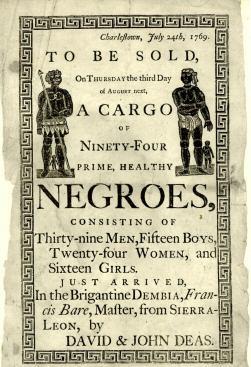
I've seen the wills of so many of my direct-line ancestors who bequeathed African-born human beings to their wives and offspring.

For example, here's an excerpt from the last will and testament of my sixth great-grandfather, General Joseph Dickson, who was born in Chester County, Pensylvania, in 1745, settled in Lincoln County, North Carolina, in 1773 and in later life moved to Rutherford County, Tennessee, where he died in 1825:


. . .I do also bequeath and give unto my son, James Dickson, a negro woman named Nanny, and that she remain on the place where we now live, during her life time. 

I give to the children of my daughter, Elizabeth Dickson Greaves, one negro girl called Milly, which shall remain with her until the youngest heir becomes of age, for the benefit of said heirs, then they shall be equally divided amongst said heirs, or sold, and the money arising from said sale be equally divided amongst them.

I give unto my son, John Dickson, one negro girl named Phillis.

I give to my son, Ezekiel Dickson, one negro boy name Jerry.

I give to the children of my daughter, Isabella Dickson Adams, one negro girl named Harriet, making Ben Adams, her husband, their guardian until the youngest becomes of age. Then she, the said Harriet, and her offspring shall be equally divided amongst them, or sold and the money arising from said sale to be so divided.

I give unto my daughter, Peggy Dickson Henderson, one negro girl called Martha. I also will that the wagon, farming utensils, household and kitchen furniture, be left and remain in the family for their use.

Then he goes on to bequeath lands and money.

There are many other wills like this one in my family history.


One of General Dickson's sons, Ezekiel Dickson (1782-1858), filed the first deed ever recorded in Benton County, Arkansas, on Feb. 27, 1827.


But it wasn't for real estate -- it was for title ownership of humans:

Know all men by these presents, that for and in consideration of the sum of $400 to me in hand paid by James M. Dickson, the receipt of which is hereby acknowledged, I, Ezekiel Dickson, of the County of Benton, in the State of Arkansas, do hereby bargain and sell unto the said James M. Dickson, a negro woman named Till, about forty-five years of age, also a negro boy child named Jack, about five or six years of age, which said negroes I hereby sell and convey as slaves for life. And I do hereby warrant and defend the title of said negroes to the said James M. Dickson, his heirs and assigns forever.

None of my ancestors were the owners of vast plantations so closely associated with slavery, especially in popular culture; they owned farms and businesses, were bankers and lawyers and such. So the various wills bequeath between one and a dozen slaves. By today's standards, even one was too many.

But that was then and this is now. As a nation we have become much more enlightened and humane than our forefathers.


But how do I come to terms with the fact that my ancestors bought, sold and bequeathed human beings?

General Joseph Dickson was not an evil man. He fought for this nation's freedom during the American Revolution, leading a group of men from Lincoln County, North Carolina, in the Battle of King's Mountain; he served in the North Carolina State Senate from 1788 to 1795; served in the Tennessee House of Representatives from 1807 to 1811 and was the speaker of the house his last two years of service; and was one of the founders of the University of North Carolina at Chapel Hill.

And Ezekiel Dickson stood side-by-side with General Andrew Jackson in the Battle of New Orleans during the War of 1812.


There's much to be proud of in the many branches of my family tree.


But to try and hide from the fact that Joseph, Ezekiel and so many others in my ancestral line owned slaves would be like telling a half-truth. I cannot simply edit out this part of my family history.

Yes, I understand that I have to take into account the historical climate of the day, and slavery was a fact of life during this time period.

As a woman, knowing that five of General Dickson's six slaves were young females evokes a strong visceral reaction.

And yet he and others, while being morally challenged by today's standards, did nothing wrong in the eyes of the law.

The Civil War ended all that. Many of my ancestors fought for the Confederacy and some for the Union.

And yet 150 years later our nation still suffers from the scars of slavery.

Not long ago I came across the website ComingToTheTable.org, which provides a supportive environment for all who wish to acknowledge and heal genealogical wounds rooted in the history of slavery in the U.S.

I joined this network of descendents of slaves and slave owners.


And so my own historical and personal journey continues. 

Thursday, February 21, 2013

Mystery History -- Solved!


Wonder Wanda wins with her 5:53 p.m. Tuesday guess "The lattice-work structure makes me think this is actually Gwinn's Drive-In Restaurant on Colorado Blvd in Pasadena. It has been through many iterations since then."

In the photo above, a carhop serves customers in an automobile at Gwinn's, a restaurant and drive-in far from downtown Pasadena at 2915 E. Colorado Blvd. It was on the north side of the street between Sunnyslope and El Nido.

I purposely cropped out the Gwinn's sign. Here's the full-frame photo:


Colorado Boulevard was an important link on Route 66 and Gwinn's, open from 1949 to 1972, had the iconic mid-century roadside architecture to fit right in with classic styles all along the "Mother Road" from Chicago to Santa Monica.


The restaurant, with inside dining and outside car service, was designed by Harold J. Bissner and R. Harold Zook.

Here you can see indoor diners and servers:


Inside and out, Gwinn's was a popular gathering place for everything from business meetings to date night. The idea for the Pasadena Beautiful Foundation began over dinner there in 1960.

This paper placemat showing the 1958 Rose Bowl Game results (Ohio State vs. Oregon) recently sold on ebay for $24.


Sadly, the building was demolished a few years ago.


Tuesday, February 19, 2013

Mystery History


Where are we? And what's happening?
 
The first person to guess correctly will win lunch with me -- I'll buy yours and you'll buy mine.
 
Remember, leave your best guess as a comment on this blog but don't try to give the entire back story (that's my job).

I'll have the full scoop on Thursday.

Thursday, February 14, 2013

Mystery History -- Solved!


I'm calling a tie between Wanda and Davis -- Wanda for coming pretty close with the 8:30 a.m. Tuesday guess "The word Pyrex suggests that the subject is glass; could it be a clock tower face? Something to do with a lens at Cal Tech or PCC? Looks like the 1930s..."'

And Davis also wins for pretty much nailing it at 9:38 a.m. Tuesday guess "Looks like it could be a mirror for a telescope; Mt. Wilson, maybe?" followed five minutes later with "Too big (and too late) for Wilson; make it the Hale Telescope for Palomar."
  
This week's prize is lunch with yours truly, so Wanda, contact me next time you're in town; Davis, e-mail me at annerdman.ladyofleisure@gmail.com and we'll make a date!

In the photo above, with throngs of people watching, a Pyrex telescope disc 200 inches in diameter, weighing 20 tons and made by the Corning Glass Company, is offloaded from a rail car in Lamanda Park on April 10, 1936, so it can be transported by truck to the optical lab at Caltech.

Because the disc was so heavy and yet very delicate, the train trip from upstate New York to Pasadena took weeks at a top speed of 25 miles per hour.

The disc was greeted by a contingent that included Edwin Hubble, the man on the far right in this group:

 
It was actually transported to Caltech by two trucks -- one pulling, one pushing:
 
 
At Caltech it would undergo more than a decade of painstaking grinding and polishing before being transported to its final destination: the Palomar Observatory in north San Diego County.

Why did it take so long? Delays were caused during World War II.

Led by George Ellery Hale, the Palomar Observatory telescope project began in 1929 with a $6 million grant from the Rockefeller Foundation. Hale had hoped engineers at General Electric could create a disc from fused quartz. After unsuccessful attempts with GE, in 1932 Hale turned to scientists at Corning who believed their Pyrex borosilicate glass could meet his requirements.

The Pyrex disc had only a rough, flat front surface. Here is a photo of men at the Corning Glass Works pouring molten Pyrex:


Pyrex does not expand or contract due to shifts in temperature, so Hale knew this would be a winner for Palomar Observatory, which sits atop Palomar Mountain and experiences weather shifts ranging from snowy cold in winter to brutal heat in summer.


Here you can see a 102-inch grinding tool at Caltech smoothing the rough Pyrex surface:


And here is the finished product 13 years later -- the beautifully refined telescope mirror, polished to an accuracy of two-millionths of an inch.


Over the years, the Hale Telescope at Palomar helped scientists verify dozens of theories, including the fact that quasars are extremely powerful yet distant objects, and that the universe is expanding, as Hubble had theorized.

Corning has a nice history of the project, including additional photos, here.

The blog Palomar Skies was started by the observatory's director of public affairs and ran until July when he left for another job.

Toward the end of lis life, George Ellery Hale is said to have looked up at the sky and rejoiced, “It is a beautiful day. The sun is shining and they are working on Palomar.” He would not live to see that telescope finished, but it was named for him.

It was the largest telescope in the world for nearly 45 years until 1993 when the Subaru telescope, whose mirror was also made by Corning, was launched in Hawaii.


Many thanks to Caltech, which owns and operates the Palomar Observatory, and to Corning Glass Company.

Tuesday, February 12, 2013

Mystery History


Where are we? And what's happening?

The first person to guess correctly will be my lunch date -- I'll buy yours and you can buy mine.

Remember, leave your best guess as a comment on this blog but don't try to give the entire back story (that's my job).

I'll have the full scoop on Thursday.

Saturday, January 26, 2013

Mystery Man


Brenda Starr had her mystery man. . .and now I have mine.

Who is this gentleman?


I was convinced beyond a shadow of a doubt that he was Andrew Jackson, my great-great-great grandfather about whom I've written on my blog not only once but twice.

He was a Confederate officer during the Civil War, was captured in Arkansas and transported to a Union prison in Virginia, then escaped from a river boat on his way to a prisoner exchange and stealthily walked all the way back home to Arkansas where he lived out the rest of his days.

Genealogy research can be a real challenge sometimes. Family information that appears to be accurate can lead a person down the wrong path.

Such was the case of Andrew Jackson's story as passed down generation to generation, until I solved the mystery after a visit to the Prairie Grove Battlefield.

And now the same is true of the photo, which I'm calling the "first photo" for purposes of this blog post.  I found it in a little binder of photocopied family history about that particular branch of the family tree. The binder was put together years ago by a son of my maternal grandma's half-sister.

The photo was clearly marked, stating that it was taken in 1913 and that it was Andrew Jackson.

WRONG!!!

This is Andrew Jackson:

 
The woman sitting next to him is his daughter, my great-great grandmother Virginia Catherine Jackson. I have seen many photos of her, ranging from young adulthood to her senior years.

The new photo was provided by a cousin of mine, named Leslie, whom I met online just the other day when she contacted me via e-mail. She had discovered my blog posts about Andrew Jackson and questioned the validity of the first photo.  

She had seen that first photo before, but the date on her copy is 1914, one year after Andrew Jackson passed away.

Here's the new photo cropped:


I looked closely at this cropped version and realized that Andrew's right eye seems to be either blind or missing.

And then something rang a bell.

I went to the hand-written memoirs of my beloved maternal grandma, Charlotte Jackson Elliott Price, which I have in my possession.

Here's a photo of her reading to my mother in the early 1930s (this photo was also a wonderful gift from Leslie's family collection, one that I had never seen before):

Her memoirs tell the tale:

"Great Grandpa Jackson had his right eye shot out in the Civil War."

So for now I'm considering the case closed.

But who is this mystery man?

The answer may be lost to the ages. But hey, I'm retired and have plenty of time on my hands, so I'm not giving up!


Thursday, December 13, 2012

Mystery History -- Solved!


Roberta wins with her 8:24 a.m. Tuesday guess "Kidspace and the old ant trail?"

In the 1986 photo above, children climb the Ant Wall at the original location of Kidspace Children's Museum inside the McKinley School gymnasium where they were located for 20 years.

In a move that was somewhat controversial at the time, Kidspace relocated in 2004 to the former
Fannie E. Morrison Horticultural Center, which they spent five years renovating and expanding inside and out in Brookside Park.

The horticultural center, designed by Fitch Harrison Haskell and funded by wealthy widow Fannie Demmon Morrison, became the first site in the western U.S. of major flower shows. These took place for many years. There were four buildings, three of which remain (a fourth was lost to fire in 1984)


When it became vacant, it was used for storage by the City of Pasadena.

Fannie Morrison was born in Wisconson in 1871 and raised in suburban Boston. Her father was the treasurer of a copper mining company and her husband, Barnabus T. Morrison, whom she married in 1899, was the treasurer of a rubber mill. She lived at 425 S. San Rafael Ave. in Pasadena.

Prior to moving to Pasadena, she was actively involved in suburban Boston civic affairs and was instrumental in improving the Demmon-Morrison mansion and coach house, which is now the home of Regis College.


The new Kidspace complex, which opened in 2004, has five times more square footage than the McKinley gym. The 3.5-acre site also includes gardens and outdoor exhibits designed to expose children to the Arroyo Seco environment.


Many thanks to Pasadena Museum of History, Kidspace Children's Museum and Regis College.

Tuesday, December 11, 2012

Mystery History


Where are we? And what's happening?

The first person to guess correctly will have a particularly easy time maneuvering through holiday traffic!

Remember, leave your best guess as a comment on this blog but don't try to give the entire back story (that's my job).

I'll have the full scoop on Thursday.